
Thank you for your interest in Progel™
Discovery. Diagnostics. Delivery.
Can be accessed on our Customer Learning Portal. The e-learning courses offer detailed and solution focused training to help better understand how to solve for common scenarios.
Discovery. Diagnostics. Delivery.
Can be accessed on our Customer Learning Portal. The e-learning courses offer detailed and solution focused training to help better understand how to solve for common scenarios.
Experts from around the globe describe the intersection between patient and healthcare worker safety, focusing on techniques to improve both occupational and public health.
Webinar Objectives:
- Describe the current global impact of bloodborne disease
- Describe occupational exposure incidents for needlesticks and sharps injuries
- Define safety as a function of focus for both patient and health worker, to reduce overall bloodborne disease
- Provide guidance on the importance of prevention programs including use of safer medical devices, immunization/vaccination programs, and safe clinical practices
- Illustrate an effective pathway for reporting exposure incidents and injuries
- Define processes for post-exposure medical treatment and prophylaxis
- Share global experiences from key stakeholders responsible for sharps safety and public health programs around the world
Save Your Seat
Thank you for your interest in the Progel™ PALS 5 Patient Challenge.
Someone will be in touch with you shortly!

Review
Review the records of your last 5 thoracic resections, and record the chest tube duration and patient length of stay.

Record
During your next lung resection surgeries, use Progel™ PALS as indicated for the treatment of intraoperative pleural air leaks. Record the chest tube duration and length of stay for your next 5 patients treated with Progel™ PALS.

Compare
The goal of the Progel™ PALS 5 Patient Challenge is to realize a reduction in average patient length of stay.
Pellentesque habitant morbi tristique senectus et netus et malesuada fames ac turpis egestas vestibulum tortor quam.
Pellentesque habitant morbi tristique senectus et netus et malesuada fames ac turpis egestas vestibulum tortor quam.
Pellentesque habitant morbi tristique senectus et netus et malesuada fames ac turpis egestas vestibulum tortor quam.
Video title here

Join the challenge

Hospitals and healthcare facilities
BD is a market leader in hospital products that can reduce the incidence of sharps injuries and exposure to bloodborne pathogens. Patient safety has been a focus of BD innovation for years, not only in the United States but also around the world. Working closely with organizations like the International Safety Center (EPINet) is an important part of our efforts to keep patients and workers safe.
Safety syringes and needles >>
Hazardous drug safety >>
Infection prevention >>
Pellentesque habitant morbi
- Tristique senectus et netus et malesuada
- Tristique senectus et netus et malesuada
- Tristique senectus et netus et malesuada
- Tristique senectus et netus et malesuada
Pellentesque habitant morbi
- Tristique senectus et netus et malesuada
- Tristique senectus et netus et malesuada
- Tristique senectus et netus et malesuada
- Tristique senectus et netus et malesuada

Common questions
Why should I consider using Progel™ PALS when I have the ability to treat air leaks utilizing a Heimlich valve?
While the use of a Heimlich valve can assist in the treatment of air leaks following surgery, there are potential impacts that may reduce patient satisfaction, which include:
-
Inability of a patient to return to work7
-
Requirement for follow-up visits7
-
Delay of adjuvant therapies7
Does using Progel™ sealant add to procedure cost?
Although the use of Progel™ PALS will add additional cost to a procedure, the use of Progel™ PALS has been shown to reduce inpatient hospitalization, which can average from $2,500 to $4,000 per day.34


Store Tab
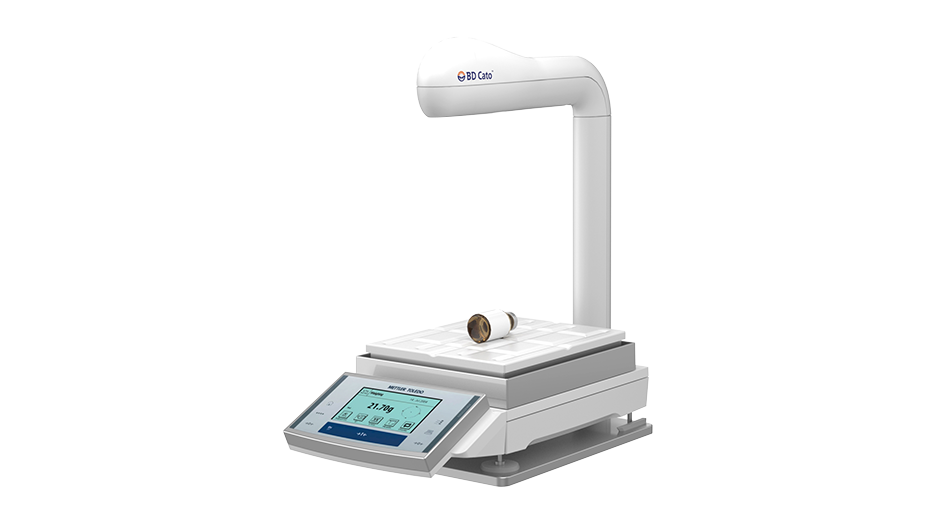

360° rotation knob is effectively sized, contoured and located to enable easy instrument rotation.
360° rotation knob is effectively sized
360° rotation knob is effectively sized
360° rotation knob is effectively sized
Store Tab
360° rotation knob is effectively sized, contoured and located to enable easy instrument rotation.
360° rotation knob is effectively sized
360° rotation knob is effectively sized
360° rotation knob is effectively sized
Hospitals and healthcare facilities
BD is a market leader in hospital products that can reduce the incidence of sharps injuries and exposure to bloodborne pathogens. Patient safety has been a focus of BD innovation for years, not only in the United States but also around the world. Working closely with organizations like the International Safety Center (EPINet) is an important part of our efforts to keep patients and workers safe.
Safety syringes and needles >>
Hazardous drug safety >>
Infection prevention >>
Hospitals and healthcare facilities
BD is a market leader in hospital products that can reduce the incidence of sharps injuries and exposure to bloodborne pathogens. Patient safety has been a focus of BD innovation for years, not only in the United States but also around the world. Working closely with organizations like the International Safety Center (EPINet) is an important part of our efforts to keep patients and workers safe.
Safety syringes and needles >>
Hazardous drug safety >>
Infection prevention >>
Intraoperative air leaks may occur in up to 75% of
thoracic surgeries, regardless of operative technique
(open or minimally invasive).35
Pellentesque habitant morbi tristique senectus et netus et malesuada fames ac turpis egestas vestibulum tortor quam.
Pellentesque habitant morbi tristique senectus et netus et malesuada fames ac turpis egestas vestibulum tortor quam.
Ibus exped et ape
Pellentesque habitant morbi tristique senectus et netus et malesuada fames ac turpis egestas vestibulum tortor quam.
Let's have a conversation
1. Lackey A, Mitchell JD. The cost of air leaks: physicians’ and patients’ perspectives. Thorac Surg Clin. 2010;20:407-411. 2. Seely AJ, Ivanovic J, Threader J, et al. Systematic classification of morbidity and mortality after thoracic surgery. Ann Thorac Surg. 2010;90:936-942; discussion 942. 3. Elsayed H, McShane J, Shackcloth M. Air leaks following pulmonary resection of lung cancer: is it a patient or surgeon related problem? Ann R Coll Surg Engl. 2012;94:422-427. 4. Liang S, Ivanovic J, Gilbert S. Quantifying the incidence and impact of postoperative prolonged alveolar air leak after pulmonary resection. J Thorac Cardiovasc Surg. 2013;145:948-954. 5. Okereke I, Murthy SC, Alster JM, et al. Characterization and importance of air leak after lobectomy. Ann Thorac Surg. 2005;79:1167-1173. 6. Varela G, Jimenez MF, Novoa N, et al. Estimating hospital costs attributable to prolonged air leak in pulmonary lobectomy. Eur J Cardiothorac Surg. 2005;27:329-333. 7. Mueller MR, Marzluf BA. The anticipation and management of air leaks and residual spaces post lung resection. J Thorac Dis. 2014;6:271-284. 8. Brunelli A, Xiume F, Al Refai M, et al. Air leaks after lobectomy increase the risk of empyema but not of cardiopulmonary complications: a case-matched analysis. Chest. 2006;130:1150-1156. 9. Billé A, Borasio P, Gisabella M, et al. Air leaks following pulmonary resection for malignancy: risk factors, qualitative and quantitative analysis. Interact Cardiovasc Thorac Surg. 2011;13:11-15; 897-898. 10. Liberman M, Muzikansky A, Wright CD, et al. Incidence and risk factors of persistent air leak after major pulmonary resection and use of chemical pleurodesis. Ann Thorac Surg. 2010;89:891-897; discussion. 11. Gómez-Caro A, Calvo MJ, Lanzas JT, et al. The approach of fused fissures with fissureless technique decreases the incidence of persistent air leak after lobectomy. Eur J Cardiothorac Surg. 2007;31:203-208. 12. Nagel MP, Gemmen E, Smith BF, et al. Assessment of the clinical and economic impact of air leaks during post-operative pulmonary surgery. Poster presented at the 13th European Congress of ISPOR. November 6-9, 2010; Prague, Czech Republic. 13. Swanson S, Miller D, McKenna R, et al. Economic burden of prolonged air leak after lung resection: open versus video-assisted thorascopic surgery (VATS). Value in Health. 2014;17:A80. 14. Hunt B, Aye R. Prolonged air leak after lung resection. Curr Respir Med Rev. 2012;8:280-284. 15. Brunelli A, Cassivi SD, Halgren L. Risk factors for prolonged air leak after pulmonary resection. Thorac Surg Clin. 2010;20:359-364. 16. Cerfolio RJ, Bass CS, Pask AH, et al. Predictors and treatment of persistent air leaks. Ann Thorac Surg. 2002;73:1727-1730; discussion 1730-1731. 17. Brunelli A, Monteverde M, Borri A, et al. Predictors of prolonged air leak after pulmonary lobectomy. Ann Thorac Surg. 2004;77:1205-1210. 18. Petrella F, Rizzo S, Radice D, et al. Predicting prolonged air leak after standard pulmonary lobectomy: computed tomography assessment and risk factors stratification. Surgeon. 2011;9:72-77. 19. Jiang L, Jiang G, Zhu Y, et al. Risk factors predisposing to prolonged air leak after video-assisted thoracoscopic surgery for spontaneous pneumothorax. Ann Thorac Surg. 2014;97:1008-1013. 20. Rivera C, Bernard A, Falcoz PE. Characterization and prediction of prolonged air leak after pulmonary resection: a nationwide study setting up the index of prolonged air leak. Ann Thorac Surg. 2011;92:1062-1068; discussion 1068. 21. Iyer A, Yadav S. Postoperative care and complications after thoracic surgery. Chapter 3. IntechOpen. Firsetenberg M, ed. doi: 10.5772/55351. Available at: https://www.intechopen. com/books/principles-and-practice-ofcardiothoracicsurgery/ postoperative-care-and-complications-afterthoracic-surgery. Published June 12, 2013. Accessed September 17, 2018. 22. C. R. Bard (Bard has joined BD). Physician survey 2014. Data on file. 23. Merritt RE, Singhal S, Shrager JB. Evidence-based suggestions for management of air leaks. Thorac Surg Clin. 2010;20:435-448. 24. Malapert G, Hanna HA, Pages PB, et al. Surgical sealant for the prevention of prolonged air leak after lung resection: meta-analysis. Ann Thorac Surg. 2010;90:1779-1785. 25. Belda-Sanchis J, Serra-Mitjans M, Iglesias Sentis M, et al. Surgical sealant for preventing air leaks after pulmonary resections in patients with lung cancer. Cochrane Database Syst Rev. 2010; CD003051. 26. Tambiah J, Rawlins R, Robb D, et al. Can tissue adhesives and glues significantly reduce the incidence and length of postoperative air leaks in patients having lung resections? Interact Cardiovasc Thorac Surg. 2007;6:529-533. 27. Okereke I, Murthy SC, Alster JM, et al. Characterization and importance of air leak after lobectomy. Ann Thorac Surg. 2005;79:1167-1173. 28. Merritt RE, Singhal S, Shrager JB. Evidence-based suggestions for management of air leaks. Thorac Surg Clin. 2010;20:435-448. 29. Allen MS, Wood DE, Hawkinson RW, et al. Prospective randomized study evaluating a biodegradable polymeric sealant for sealing intraoperative air leaks that occur during pulmonary resection. Ann Thorac Surg. 2004;77:1792-1801. 30. Burt BM, Shrager JB. Prevention and management of postoperative air leaks. Ann Cardiothoac Surg. 2014;3:216-218. 31. C. R. Bard (Bard has joined BD). Minimally invasive Progel trial; 2014. Data on file. 32. Progel Pleural Air Leak Sealant Instructions for Use. Morristown, NJ: C. R. Bard, Inc (Bard has joined BD); 2014. 33. Klijian A. A novel approach to control air leaks in complex lung surgery: a retrospective review. J Cardiothorac Surg. 2012;7:49. 34. Swanson SJ, Meyers BF, Gunnarsson CL, et al. Video-assisted thoracoscopic lobectomy is less costly and morbid than open lobectomy: a retrospective multiinstitutional database analysis. Ann Thorac Surg. 2012;93:1027-1032. 35. Fuller, Clark. Reduction of intraoperative air leaks with Progel in pulmonary resection: a comprehensive review. Journal of Cardiothoracic Surgery. 2013;8:90.
See full product labeling for complete Instructions For Use and important safety information.
BD-27040
BD is committed to keeping your personal data protected and secure. More information on how we protect your personal data can be found in our privacy statement and our cookie policy.