Close to 75,000 Canadian healthcare workers are occupationally exposed to antineoplastic agents.1

Providing life-saving treatments can put your staff at risk

Over 52% of these workers are pharmacy staff—pharmacists, technicians and assistants.1
Nurses, physician specialists and cleaning workers are also at risk of exposure.1
The risks to their health are real and significant.

Detrimental effect on DNA

Pharmacists and nurses who handle antineoplastic drugs show a 2.5-fold increase in total chromosomal aberrations (CAs), with up to a 5-fold increase in certain CA types2,3

Increased rates of cancer

This includes relative risk of leukemia increases for oncology nurses,4 a 2.8-times increase in non-melanoma skin cancer and a 3.7-times increase in non-Hodgkin’s lymphoma in pharmacy techs5

Damage to internal organs

Three consecutive head nurses handling cytostatic agents over time had liver damage6

Reproductive issues

Double the risk of miscarriage among staff handling antineoplastic drugs, along with an increase in risk of malformations in offspring7,8

Exposure can occur any point in the journey of a hazardous drug in your facility

A Canadian study of six hospitals found that frequently contacted surfaces at every stage of the hospital medication system had measurable levels of antineoplastic drug contamination.9

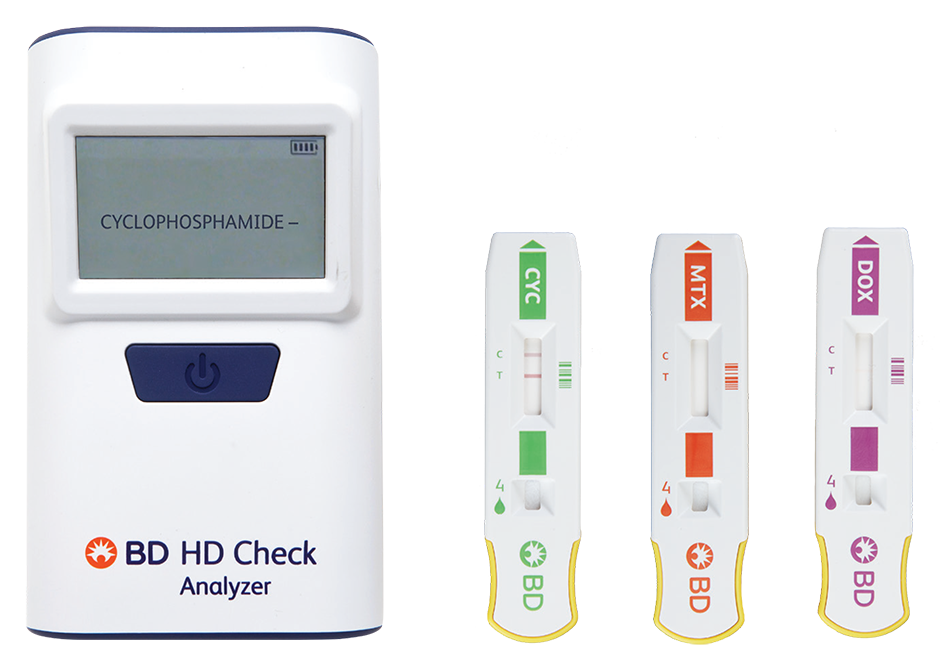
The revolutionary BD® HD Check System has a convenient handheld design that enables testing for select HDs at any location. It provides reliable, easy-to-read results in less than 10 minutes, so you can take immediate corrective action and prevent HD residue from spreading. See how >

 
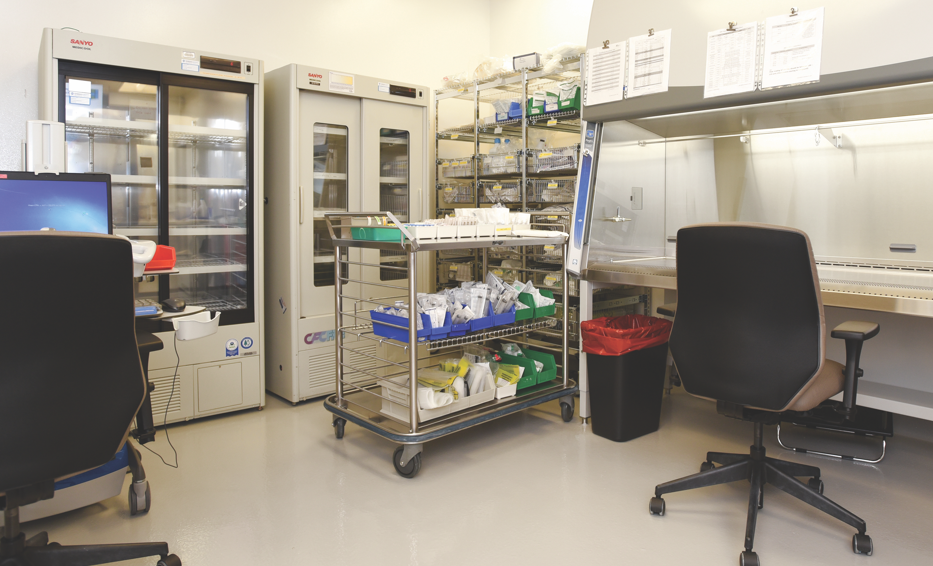
  1. Dock/pharmacy receiving and storage Dock/pharmacy receiving and storage
  2. Pharmacy compounding Pharmacy
    compounding
  3. Pharmacy verification Pharmacy
    verification
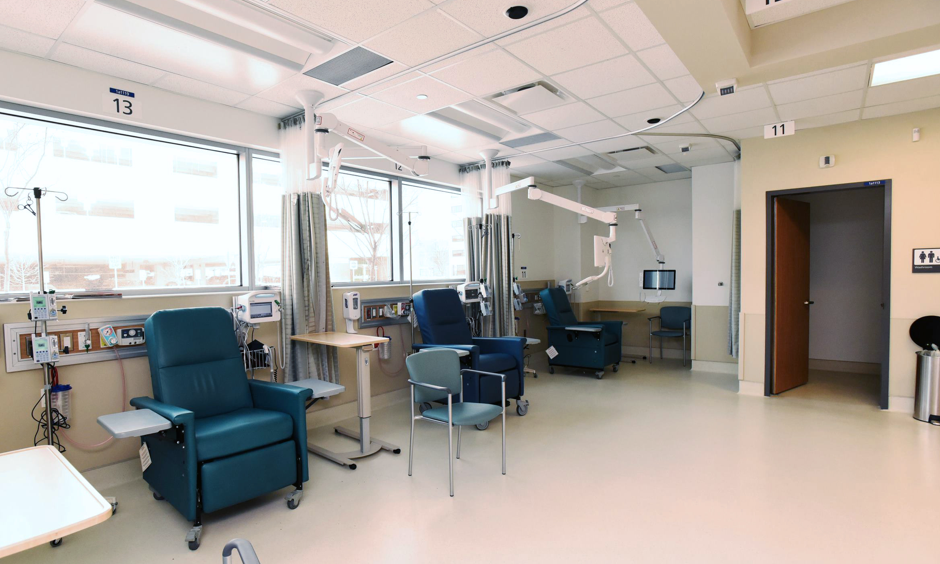
  4. Transport and storage in patient area Transport and storage in patient area
  5. Nurse administration Nurse
    administration
  6. Housekeeping Housekeeping

Every day, each HD travels through at least six departments in a facility, with dozens of hands touching it along the way.9 To learn about what this journey means to you and your health, watch the "Day in the Life of a Hazardous Drug" video

Unsafe surfaces and practices can increase the risk of hazardous drug exposure

A 2019 study of 83 Canadian oncology pharmacy and patient care areas showed evidence of environmental contamination, with 36% of samples testing positive for hazardous drug residue.10 Multiple surfaces were found to be frequently contaminated with at least one antineoplastic drug10.

Explore other high-touch work surfaces that could be contaminated

Both NAPRA and USP <800> recommend sampling surfaces routinely to help improve environmental quality12,13
Yet a 2017 survey revealed that fewer than one in four U.S. hospitals practice environmental sampling.14 Safety experts are sharing the need for, and benefits of, routine monitoring:

We don’t know what a safe level of exposure is. And just like our radiation principles, we want to go as low as reasonably possible. Anything you can put into place that prevents you being exposed is going to be to your long-term benefit. […] From my perspective, the only right answer is no exposure. — Laureen Plommer, Clinical Educator for Systemic Therapy16
Negative results today do not mean that tomorrow will be safe. [...] I find the BD® HD Check System fast, easy and reliable to use. It takes about 10 minutes to set up the device initially. After that, it takes less than 10 minutes to process a sample. This is a significant improvement over traditional wipe sampling kits that may take up to two weeks or longer to give a result, during which time HD residue may be spread to other locations. — Fred Massoomi, RPh, PharmD, FASHP13

Ibus exped et ape

Pellentesque habitant morbi tristique senectus et netus et malesuada fames ac turpis egestas vestibulum tortor quam.

Ibus exped et ape

Pellentesque habitant morbi tristique senectus et netus et malesuada fames ac turpis egestas vestibulum tortor quam.

Ibus exped et ape

Pellentesque habitant morbi tristique senectus et netus et malesuada fames ac turpis egestas vestibulum tortor quam.

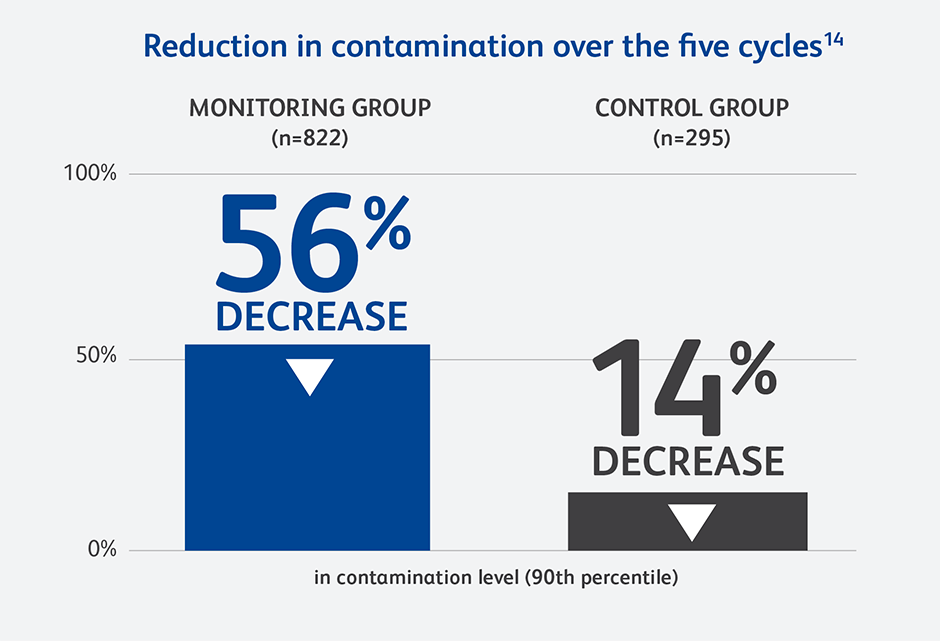
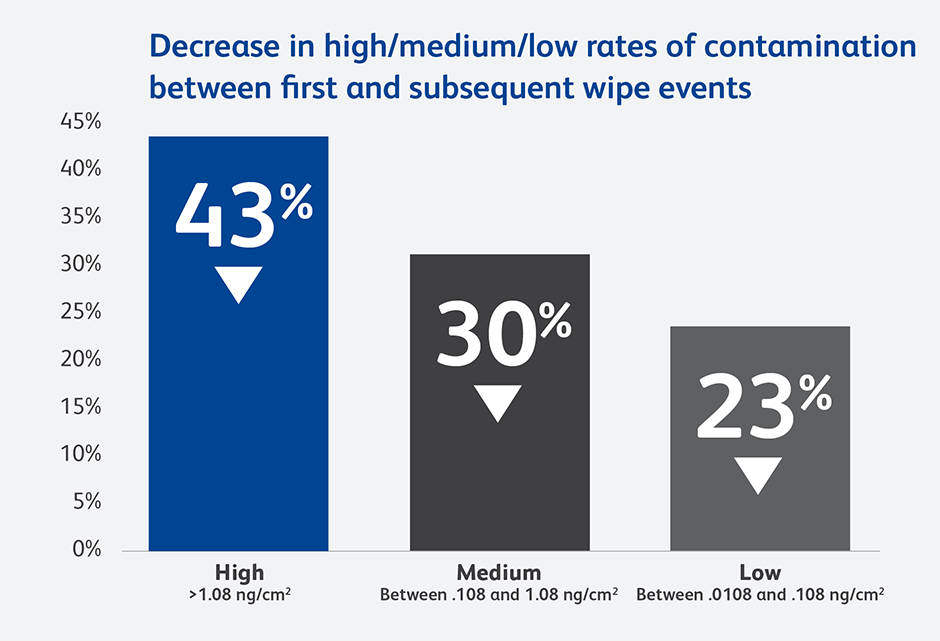
Routine monitoring can significantly reduce contamination and even help to prevent it18,19


The BD® HD Check System can detect surface contamination for select HDs in less than 10 minutes

  • Easy-to-read results
  • Convenient handheld design
  • Track contamination levels over time

HD Check System

The BD® HD Check System currently tests for three commonly used HDs

Ibus exped et ape

Pellentesque habitant morbi tristique senectus et netus et malesuada fames ac turpis egestas vestibulum tortor quam.

And facilities like New York-Presbyterian/Queens are already seeing results

The advent of the BD® HD Check System raised the bar for HD detection and protection. [...] We do the test ourselves. We get results quickly. We can retest surfaces immediately. We pay less for each sample. — Alex Melchert, RPh, MS, Director of Pharmacy, New York-Presbyterian/Queens16

Together, let’s keep hazardous drug surface contamination in check

Stay informed about the latest in HD detection

NARPA: National Association of Pharmacy Regulatory Authorities
USP: United States Pharmacopeia

References

1. CAREX Canada. Antineoplastic Agents Occupational Exposures. Accessed on May 19, 2021, at http://www.carexcanada.ca/profile/antineoplastic_agents-occupational-exposures
2. Cavallo D, Ursini CL, Perniconi B, et al. Evaluation of genotoxic effects induced by exposure to antineoplastic drugs in lymphocytes and exfoliated buccal cells of oncology nurses and pharmacy employees. Mutat Res. 2005;587(1-2):45-51. doi: 10.1016/j.mrgentox.2005.07.008
3. McDiarmid MA, Oliver MS, Roth TS, Rogers B, Escalante C. Chromosome 5 and 7 abnormalities in oncology personnel handling anticancer drugs. J Occup Environ Med.2010;52(10):1028-34. doi: 10.1097/JOM.0b013e3181f73ae6
4. Skov T, Maarup B, Olsen J, et al. Leukaemia and reproductive outcome among nurses handling antineoplastic drugs. Br J Ind Med. 1992;49(12):855-861. doi: 10.1136/oem.49.12.855
5. Hansen J, Olsen JH. Cancer morbidity among Danish female pharmacy technicians. Scand J Work Environ Health. 1994;20(1):22-26. doi: 10.5271/sjweh.1433.
6. Sotaniemi EA, Sutinen S, Arranto AJ, et al. Liver damage in nurses handling cytostatic agents. Acta Med Scand. 1983;214(3):181-189. doi: 10.1111/j.0954-6820.1983.tb08593.x.
7. Nurses’ Health and Workplace Exposures to Hazardous Substances. Study conducted by Environmental Working Group, Health Care Without Harm, American Nurses Association, Environmental Health Education Center at University of Maryland School of Nursing. Environmental Working Group website. http://www.ewg.org/research/nurseshealth/nurses-exposure Published December 11, 2007. Accessed January 24, 2017.
8. Hemminki K, Kyronen P, Lindbohm ML. Spontaneous abortions and malformations in the offspring of nurses exposed to anaesthetic gases, cytostatic drugs, and other potential hazards in hospitals, based on registered information of outcome. J Epidemiol Community Health. 1985;39(2):141-147. doi: 10.1136/jech.39.2.141
9. Hon CY, Teschke K, Chu W, Demers P, Venners S. Antineoplastic drug contamination of surfaces throughout the hospital medication system in Canadian hospitals. J Occup Environ Hyg.2013;10(7):374-83. doi: 10.1080/15459624.2013.789743
10. Chauchat L, Tanguay C, Caron NJ, Gagné S, Labrèche F, Bussières JF. Surface contamination with ten antineoplastic drugs in 83 Canadian centers. J Oncol Pharm Pract. 2019;25(5):1089-1098. doi: 10.1177/1078155218773862
11. Palamini M, Hilliquin D, Delisle JF, Chouinard A, Bussières JF. Surface Contamination by Antineoplastic Drugs in Two Oncology Inpatient Units. Pharm Technol Hosp Pharm. 2020;5(1). https://doi.org/10.1515/pthp-2019-0017
12. National Association of Pharmacy Regulatory Authorities (NAPRA). Model Standards for Pharmacy Compounding of Non-hazardous Sterile Preparations. Approved November 1, 2016. Accessed on May 19, 2021, at http://napra.ca/sites/default/files/2017-09/Mdl_Stnds_Pharmacy_Compounding_NonHazardous_Sterile_Preparations_Nov2016_Revised_b.pdf
13. United States Pharmacopeial Convention. USP General Chapter <800> Hazardous Drugs—Handling in Healthcare Settings. Accessed on May 20, 2021, at http://www.usp.org/compounding/general-chapterhazardous-drugs-handlinghealthcare
14. Heller A. On the Front Lines of Wipe Sampling. Pharmacy Technology Report. http://www.pharmacytechnologyreport.com/Article/PrintArticle?articleID=56059. Published October 16, 2019. Accessed January 29, 2020.
15. Berruyer M, Tanguay C, Caron NJ, Lefebvre M, Bussières JF. Multicenter Study of Environmental Contamination with Antineoplastic Drugs in 36 Canadian Hospitals: A 2013 Follow-up Study. J Occup Environ Hyg. 2015;12:2,87-94, doi: 10.1080/15459624.2014.949725
16. BD video interview of Laureen Plommer. http://go.bd.com/nurses-are-worth-it.html
17. Massoomi F. HD Check-In An interview with HD safety expert Fred Massoomi, RPh, PharmD, FASHP. BD-7875. 2018;9.
18. Kiffmeyer TK, Tuerk J, Hahn M, et al. Application and assessment of a regular environmental monitoring of the antineoplastic drug contamination level in pharmacies–the MEWIP project. Ann Occup Hyg. 2013;57(4):444-455. doi:10.1093/annhyg/mes081
19. Salch SA, Zamboni WC, Zamboni BA, Eckel SF. Patterns and characteristics associated with surface contamination of hazardous drugs in hospital pharmacies. Am J Health Syst Pharm. 2019;76(9):591-598. https://doi.org/10.1093/ajhp/zxz033
20. Innovation for safety. New York-Presbyterian/Queens steps up hazardous drug monitoring. 2019;6.
21. BD video interview of Melanie Kuhelj. http://go.bd.com/nurses-are-worth-it.html


Digital Ad References

*Tests for select hazardous drugs. Surfaces with contamination at or above the limits of detection have 95% specificity and sensitivity.
†Kiffmeyer TK, Tuerk J, Hahn M, et al. Application and assessment of a regular environmental monitoring of the antineoplastic drug contamination level in pharmacies–the MEWIP project. Ann Occup Hyg. 2013;57(4):444-455. doi:10.1093/annhyg/mes081.
††National Association of Pharmacy Regulatory Authorities (NAPRA). Model Standards for Pharmacy Compounding of Non-hazardous Sterile Preparations. Approved November 1, 2016. Accessed on May 19, 2021, at http://napra.ca/sites/default/files/2017-09/Mdl_Stnds_Pharmacy_Compounding_NonHazardous_Sterile_Preparations_Nov2016_Revised_b.pdf.
^United States Pharmacopeial Convention. USP General Chapter 800> Hazardous Drugs—Handling in Healthcare Settings. Accessed on May 20, 2021, at http://www.usp.org/compounding/general-chapterhazardous-drugs-handlinghealthcare.
#CAREX Canada. Antineoplastic Agents Occupational Exposures. Accessed on May 19, 2021, at http://www.carexcanada.ca/profile/antineoplastic_agents-occupational-exposures.

BD is committed to keeping your personal data protected and secure. More information on how we protect your personal data can be found in our privacy statement and our cookie policy.

Contact us | Unsubscribe | My profile